
Table of Contents
- Why Smart Glasses Without Subscriptions Matter
- Understanding Subscription Models in Wearable Technology
- How to Choose Smart Glasses That Fit Your Needs
- Best Smart Glasses for Professionals Without Monthly Fees
- Smart Glasses With AI Features, No Subscription Required
- Offline-First Functionality and Hardware Durability
- Comparing Total Cost of Ownership
- Conclusion
- Frequently Asked Questions
Last Updated: September 30, 2026
Why Smart Glasses Without Subscriptions Matter
The smart glasses market has exploded. You can find devices ranging from basic activity trackers to AI-powered cameras. But here's the catch: many manufacturers have shifted toward recurring revenue models that lock you into monthly or annual payments just to use features you thought you already owned.

This matters because subscription fatigue is real. A device that costs $80 upfront becomes a $180 annual commitment when you factor in mandatory software paywalls.
The good news? Quality options exist. You don't need to choose between affordability and functionality. Understanding what separates subscription-free smart glasses from the rest helps you make a purchase that won't drain your wallet year after year.
Understanding Subscription Models in Wearable Technology
Smart glasses manufacturers employ subscription models in distinct ways, and understanding the mechanics helps you identify which devices truly function without recurring fees versus those that gate critical features behind paywalls.
Cloud-Based AI Processing: Many manufacturers charge subscriptions for features that require server resources. Real-time translation, advanced object recognition, and cloud-based data storage typically fall into this category. When you use these features, images or audio are uploaded to manufacturer servers for processing, then results are sent back to your glasses. This architecture justifies recurring costs because the manufacturer pays for compute resources, data storage, and API infrastructure. However, this model creates a dependency: if you stop paying, the feature stops working entirely.
On-Device Processing: Some smart glasses handle AI functions locally through processors built into the hardware. Object recognition, basic voice commands, and local video recording require no cloud connectivity and no subscription. The trade-off is computational power, on-device processors are less powerful than cloud servers, but for most professional use cases (reading text, identifying objects, basic translation), the performance is sufficient. Devices prioritizing on-device processing eliminate subscription requirements because all processing happens on hardware you own.
Companion App Access: A third subscription model gates the companion mobile app itself. Some manufacturers require monthly or annual fees just to access the app that controls your glasses, even if the glasses' core functions work offline. This approach is less common but still appears in premium wearable lines. The glasses may record video and handle calls without subscription, but configuring settings or accessing recorded footage requires an active app subscription.
Feature Tier Paywalls: Some manufacturers use a hybrid approach: basic features (video recording, voice calls, touch controls) work without subscription, but premium features (advanced translation, professional-grade object recognition, cloud backup) unlock only with a paid tier. This creates a "freemium" experience where you own the hardware but must pay to access the full feature set.
Data Synchronization and Cloud Storage: Even when core features work offline, manufacturers may charge for cloud backup of your recordings, photos, or settings. If you want your video library synced across devices or backed up to the cloud, a subscription activates. Devices that store data locally only (no cloud sync) avoid this cost entirely.
The critical distinction for your purchase decision: subscription-free smart glasses prioritize on-device processing and local data storage. They're designed so you get full functionality the moment you put them on, without waiting for cloud services or hitting a paywall. This approach trades some computational power for complete ownership and predictable costs. When evaluating smart glasses without monthly subscription fees, verify that core features, video recording, voice communication, basic AI functions, work without internet connectivity. If a manufacturer's marketing emphasizes cloud features or requires an app subscription just to configure the device, those are signals that ongoing payments will be part of your experience.
How to Choose Smart Glasses That Fit Your Needs
Start by identifying what you actually need the glasses to do. Are you recording video? Translating conversations? Tracking activity? Getting notifications? Each use case points toward different hardware requirements.
Next, examine battery life and offline functionality. A device that requires constant cloud connectivity becomes useless the moment your internet drops. Smart glasses without monthly subscription fees typically emphasize local processing, which also means better privacy since your data stays on the device rather than syncing to manufacturer servers.
Check compatibility with your existing ecosystem. Do the glasses work with your phone's operating system? Can you use them with prescription lenses if you need them? These practical details often get overlooked but determine whether the glasses actually fit into your daily routine.
Finally, evaluate the hardware durability. Wearable technology takes abuse. Look for devices built with quality materials, solid construction, and reasonable warranty coverage. A device that breaks after six months costs far more than the upfront purchase price.
Best Smart Glasses for Professionals Without Monthly Fees
The AI Camera Smart Glasses from CleanCharge represent the strongest option for professionals who want smart glasses without subscription fees. These glasses deliver professional-grade features at an accessible price point.
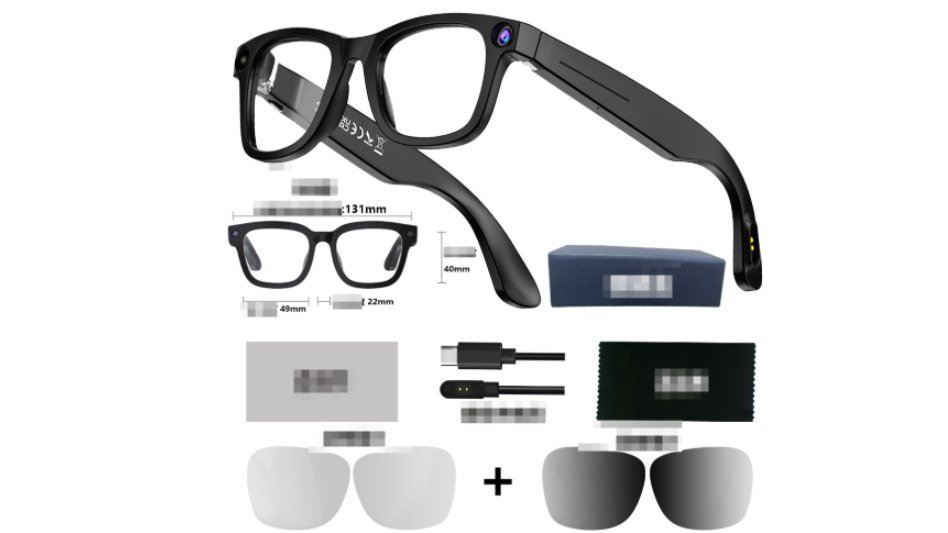
The device includes HD video recording with anti-shake technology, making it suitable for documentation and hands-free recording during meetings. Voice call functionality works directly through the glasses, eliminating the need for your phone during calls. Touch controls keep navigation intuitive, you're not fumbling with apps or menus.
Object recognition runs on-device, meaning you get instant identification without uploading images to cloud servers. This protects privacy while delivering real-time results. The glasses come in both sunglasses and transparent lens options, so you can choose based on your work environment and personal preference.
Battery capacity sits at 390mAh, which handles a full workday of moderate use. The package includes a protective case, charging cable, and cleaning cloth. At $79.99, these glasses eliminate the subscription question entirely, you own the hardware and the features work immediately out of the box.
For professionals seeking smart glasses without monthly subscription fees, these deliver the core functionality that matters: recording, communication, and on-device intelligence without recurring costs.
Smart Glasses With AI Features, No Subscription Required
AI integration in smart glasses comes in two architectures: cloud-based processing and on-device processing. Understanding the difference is essential because it directly determines whether you'll face subscription costs and what performance you can expect.
How On-Device AI Works: On-device AI runs machine learning models directly on the processor built into your glasses. The device contains pre-trained neural networks for tasks like object recognition, text reading, and language translation. When you point your glasses at something, the processor analyzes the image locally and returns results within milliseconds. No data leaves the device. No cloud service is involved. This architecture eliminates subscription costs because you're not paying for server resources, the processing power comes from hardware you already own.
Latency and Speed Advantages: On-device processing delivers near-instantaneous results. Real-time translation happens with minimal delay because data doesn't need to travel to a server and back. Object recognition identifies items in your field of view in real time without waiting for cloud responses. This speed matters for professional use cases: a technician identifying equipment parts, a professional reading foreign language documents, or a user navigating an unfamiliar environment. Cloud-based alternatives introduce latency, typically 500 milliseconds to 2 seconds depending on network conditions, which breaks the real-time experience.
Privacy and Data Retention: On-device processing means your images, audio, and video never leave your glasses. No cloud storage. No manufacturer access to your visual data. No risk of data breaches affecting your personal recordings. This is a significant advantage for professionals handling sensitive information, healthcare workers, or anyone concerned about privacy. Cloud-based AI systems, by contrast, typically store your data on manufacturer servers for model improvement and feature development, creating privacy exposure even if you're not actively aware of it.
Processing Power Limitations: The trade-off is computational capacity. Mobile processors in smart glasses are far less powerful than cloud servers. A cloud-based translation system can handle complex linguistic nuances, rare languages, and context-dependent meanings.
Offline-First Functionality and Hardware Durability
Devices designed for offline-first functionality prioritize features that work without internet connectivity. This approach fundamentally changes how you experience the hardware. You're never waiting for cloud services. You're never locked out by server downtime. The glasses work the same way whether you're in an office or in a rural area without signal.
Comparing Total Cost of Ownership
Total cost of ownership includes the upfront purchase price plus all recurring costs over the device's useful life. For smart glasses, this means hardware cost plus any mandatory subscriptions, cloud storage fees, or software paywalls.
Conclusion
Smart glasses without monthly subscription fees give you control over your technology costs. The AI Camera Smart Glasses from CleanCharge deliver professional-grade features, HD video recording, voice calling, object recognition, and real-time translation, without locking you into recurring payments. At $79.99, they represent genuine value for professionals who need reliable wearable technology without subscription complexity. Start with code First20 at checkout for 20% off your first purchase at shopcleancharge.com and experience smart glasses that work the way you need them to.
Frequently Asked Questions
Do you need a subscription for smart glasses?
Not all smart glasses require subscriptions. Many models, like the AI Camera Smart Glasses, operate as one-time purchases with full functionality out of the box. However, some premium brands lock advanced features like cloud-based AI processing, live translation services, or premium companion app features behind monthly paywalls. The key is checking what features require ongoing fees before you buy. Offline-capable models give you the most control over recurring costs.
What are the best smart glasses for professionals without monthly fees?
Look for models with on-device processing and durable hardware built for daily professional use. The AI Camera Smart Glasses ($79.99) combines HD video recording, voice call capability, real-time translation, and object recognition without requiring a subscription. For professionals, prioritize devices with reliable battery life and a design that looks professional in business settings.
Are smart glasses with AI features always subscription-based?
No. While some brands push cloud-based AI features behind paywalls, many smart glasses with AI features no subscription are available. On-device processing allows AI functions like voice recognition, translation, and object detection to run locally without cloud dependency. This approach protects your data privacy, works offline, and eliminates recurring fees. The trade-off is slightly less processing power compared to cloud-based systems, but for most daily tasks, on-device AI performs excellently.
How do one-time purchase smart glasses compare to subscription models in terms of functionality?
One-time purchase smart glasses deliver core functionality immediately and indefinitely. Subscription models often offer more advanced cloud-based features and regular software updates as part of the recurring fee. However, one-time purchase devices with firmware support continue improving through updates without extra cost. The real difference is in premium features: subscription models may offer higher-quality cloud processing, expanded app ecosystems, or exclusive services. For basic use cases like video recording, voice calls, translation, and activity tracking, one-time models are fully functional.